Work package 1
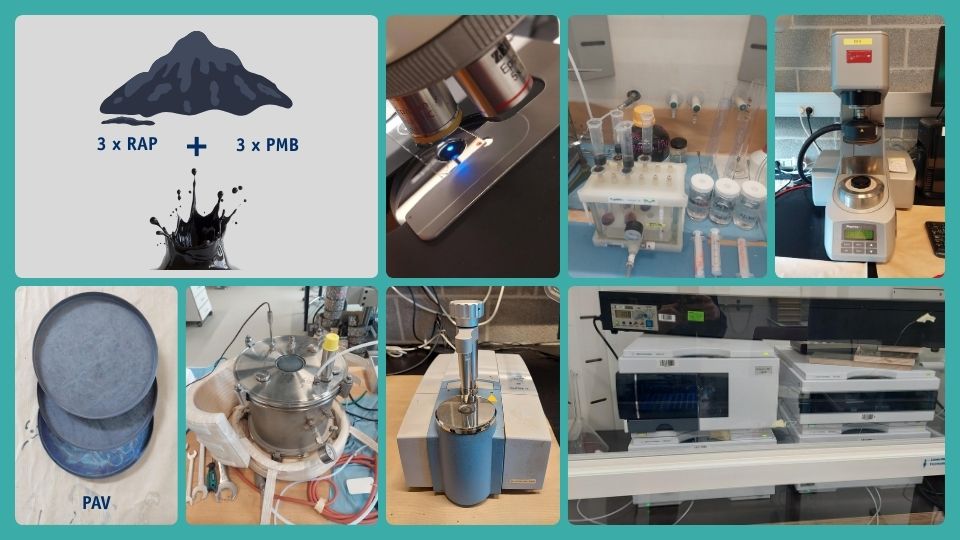
Characterization, ageing and blending of virgin and aged PMB blends
Objective
Understanding how changes observed on the spectroscopic and morphological level explain changes observed on the rheological level with regard to the long-term response of PMB blends.
Chemical, rheological and morphological evaluation
  • Aged PMBs
  • Blends of aged and virgin PMBs
  • Effect of additives like rejuvenators or high-modified PMB
Work package 2
Effect of RAP clusters on bitumen distribution, blending, interface adhesion and mechanical reponse in recycled mixtures
Objective
Understand the multiscale impact of RAP clusters on binder blending and mechanical performance of recycled mixtures.
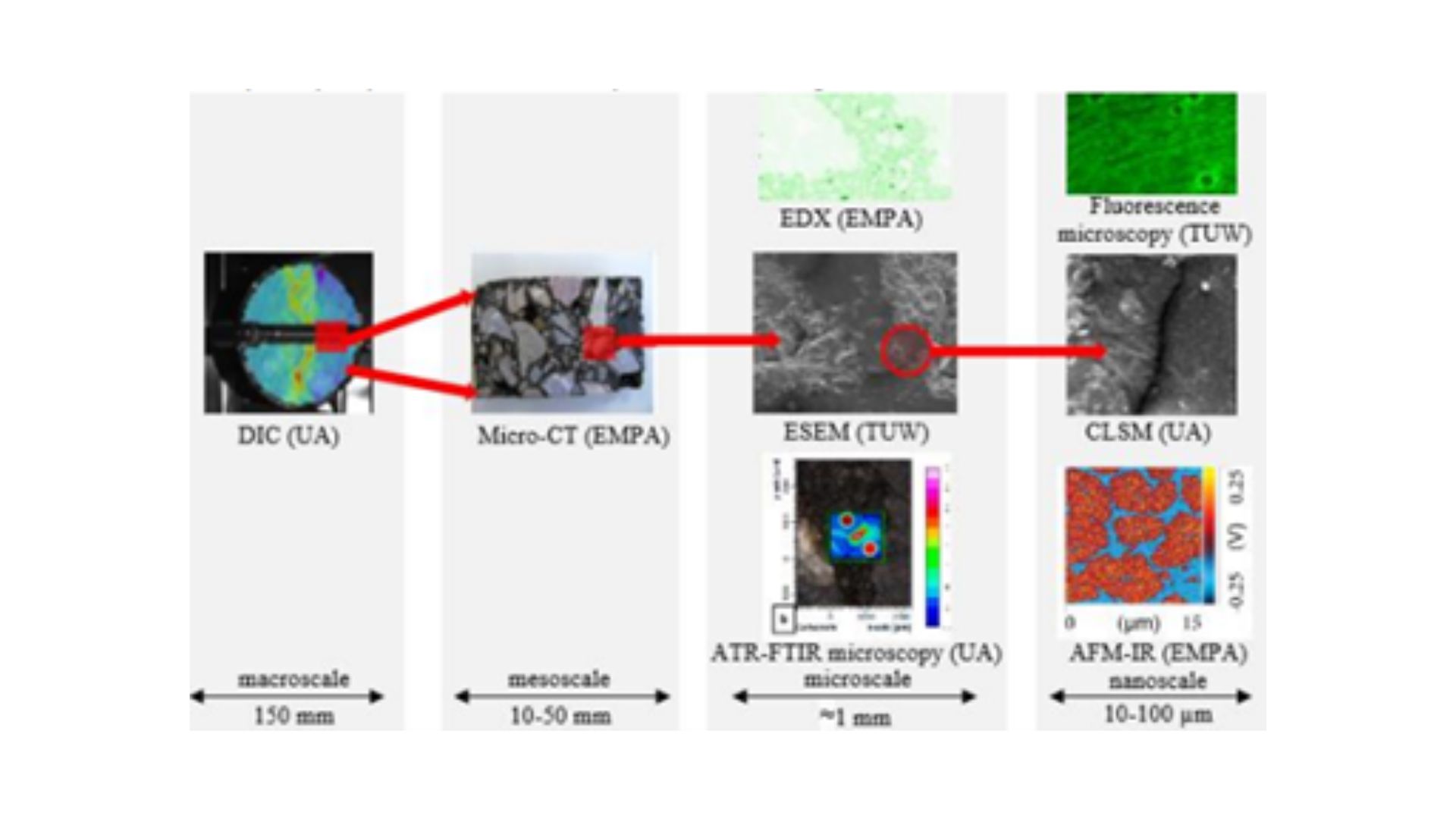
Multiscale investigation
  • Bitumen distribution, blending and adhesion at RAP cluster interfaces
  • Mechanical response of engineered mixtures with controlled RAP content
  • Influence of material variables such as RAP source, cluster characteristics, and mixture design
Work package 3
Mixture optimization and validation of results
Deliverable
Develop and validate performance-optimised recycled asphalt mixtures using PMB RAP and advanced ageing and testing protocols.
Development and testing
  • Optimized surface layer mixtures with PMB RAP
  • Balanced mix design with realistic ageing (e.g., VAPro)
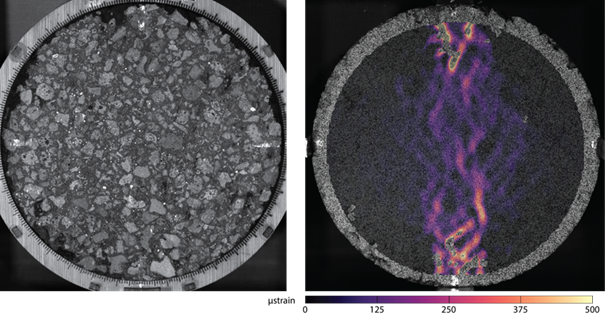
  • Durability testing: SCB, fatigue-DIC, thermal stress, ravelling
Work package 4
Application of machine learning to find relationships between the different scales
Deliverable
Establish predictive relationships between chemical, morphological, andmechanical performance across scales using machine learning.
Theory-guided machine learning based on
  • Unified multi-scale materials database from project, literature, and institutional archives
  • Parameter prioritization across scales using wide dataset approaches
  • Identification of key predictors linking binder, cluster, and mixture performance